Artificial intelligence- it is the buzz word we hear constantly at the moment. From our cars to our refrigerators, artificial intelligence seems to be fast becoming a part of our daily lives. But what about in our hearing aids?
The Oxford Dictionary defines artificial intelligence as a computer system that is able to perform a task that normally requires human intelligence (The Oxford Dictionary of Phrase and Fable, 2023). Helping a person hear optimally with a hearing aid would certainly fall into this category. Hearing aids have long since moved on from being basic amplifiers. They can now be rechargeable and automatically adjust to your environment. But why do we need all this additional processing?
The answer is simply that hearing loss does not just happen in our ears. Hearing loss happens gradually and it often takes people up to 10 years to even get a hearing test (ENT Scotland, 2022). In this time, your brain can get used to the reduced auditory input and can no longer understand speech in complex situations the way it used to. This is why people with hearing loss sometimes struggle more in background noise or within a group of multiple talkers compared to those with normal hearing (Moore, 2016).
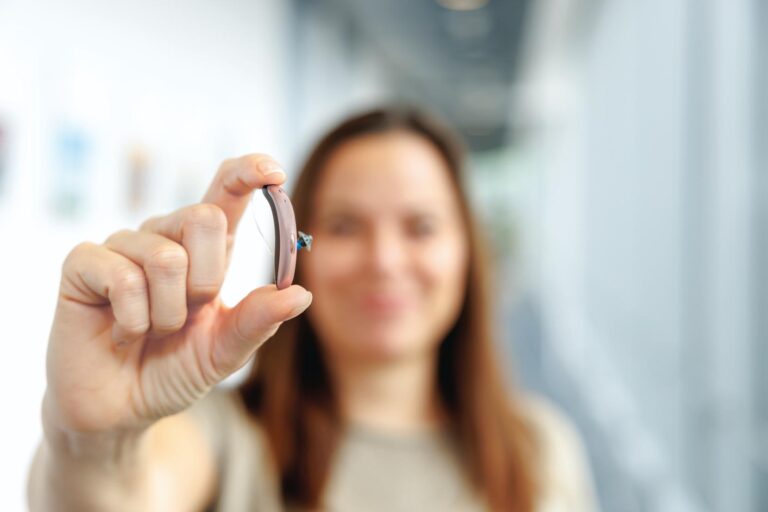
Hearing aids with good signal processing that can automatically adapt to your environment can help to overcome this. Hearing aids 15 years ago often required the user to press a button whenever they went into a noisy environment, but then they also had to remember to press the button when they left. With improvements in hearing aids now, wearers can almost forget they are wearing hearing aids at all! The artificial intelligence within the hearing aids assess your acoustic environment every 0.4 seconds (Phonak, 2023). This means it can make changes to the way your hearing aid processes sound in real time. For example, if you park your car, walk down the street and enter a coffee shop, the hearing aids will change along with your environment without you having to do anything at all. The benefit of this is up to a 20% improvement in speech understanding in all environments due to artificial intelligence (Rakita, 2015).
Ultimately, artificial intelligence is here to stay and in hearing aids it is certainly for the better. They allowed clinical audiologists to programme hearing aids much more personally to the wearer, which allows for a much better hearing outcome. For more information on hearing aids and new technology feel free to ask your clinical audiologist.
References
The Oxford Dictionary of Phrase and Fable, 2023: , (The Oxford Dictionary of Phrase and Fable, 2023)
ENT Scotland, 2022: , (ENT Scotland, 2022),
Moore, 2016: , (Moore, 2016),
Phonak, 2023: , (Phonak, 2023),
Rakita, 2015: , (Rakita, 2015),