If you can hear well at home but struggle in restaurants, meetings or busy places, you’re not imagining it.
Understanding speech in background noise is the biggest challenge for people with hearing loss and the most common reason hearing aids feel disappointing.
Recent research published in The Hearing Review (https://hearingreview.com/hearing-products/hearing-aids/speech-in-noise/leveraging-deep-neural-networks-in-hearing-aids) explains why this happens and why newer hearing aids, when fitted properly, can make such a dramatic difference.
The Problem: Hearing Aids Can’t Just “Turn Noise Down”
Traditional hearing aids mainly focus on amplifying sound.
But in noisy environments, louder isn’t better – clearer is.
The research shows that older noise-reduction systems often struggle because they:
- Treat all sound as equally important
- Reduce background noise and parts of speech
- Leave conversations feeling muffled or tiring
That’s why many people say:
“I can hear people talking – I just can’t understand them.”
What the Research Shows Has Changed
The study highlights how modern hearing aids now use artificial intelligence, known as deep neural networks (DNNs).
In simple terms:
- These systems are trained on millions of real-life listening situations
- They learn how speech behaves differently from background noise
- They prioritise speech while reducing competing sounds
Think of it like a smart assistant that knows which voices matter and when.
A Real Patient Example from Pindrop Hearing
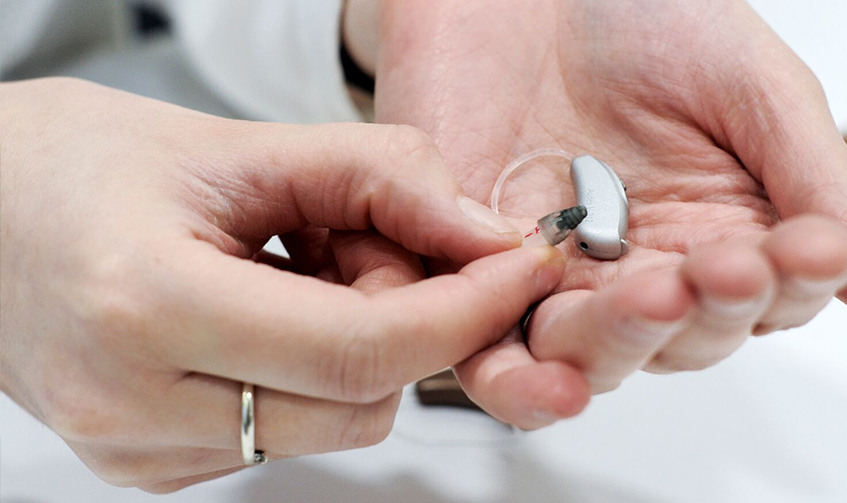
One of our patients came to us already wearing hearing aids. They had been fitted with a highstreet brand in 2024 and chose them for aesthetic reasons rather than sound quality as they are very thin and less visible than a conventional RIC hearing aid.
They were discreet and modern-looking but in real life:
- Work meetings were exhausting
- Background noise overwhelmed conversation
- Family members were constantly asked to repeat themselves
When we tested his hearing in noise, his maximum speech understanding was around 60% using his old hearing aids.
What Made the Difference
We followed the same principles highlighted in the research but applied them properly in clinic.
Real-World Testing
The study emphasises that speech-in-noise performance must be measured, not assumed.
We include speech-in-noise testing as standard – something the patient hadn’t experienced before.
Intelligent AI-Based Technology
We fitted advanced hearing aids from Phonak, using AI-driven sound processing designed specifically for noisy environments.
These systems don’t just reduce noise – they actively enhance speech clarity.
Verifying the Fit
The research makes clear that even the best technology fails if it isn’t fitted accurately.
We used Real Ear Measurements (REM) – the gold standard – to ensure the sound reaching the ear was exactly right.
The Result?
Speech understanding in noise improved from 60% to 90%.
But what mattered most was everyday life:
“Meetings at work are so much easier and my partner doesn’t need to repeat herself as often.”
What This Means for You
Research now confirms what many people experience:
- Hearing in noise is the hardest part
- AI-based hearing aids can help – when fitted and verified properly
If your hearing aids aren’t coping in noisy places, the solution may not be newer but better assessed.
Book An Appointment
Author: Harry Akram BSc (Hons), RHAD, Clinical Audiologist, Pindrop Hearing