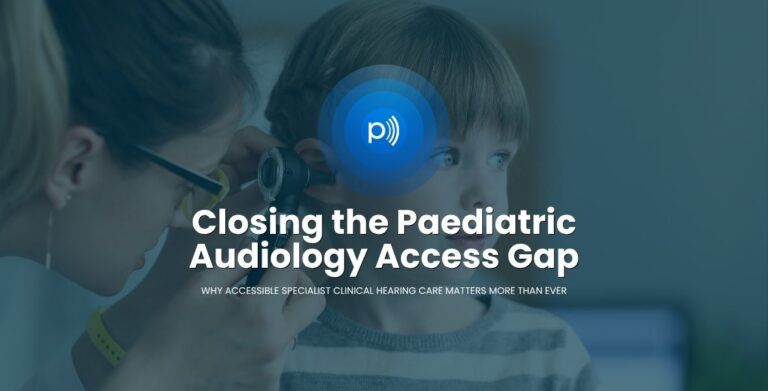
Why accessible specialist clinical hearing care matters more than ever
When paediatric hearing concerns arise, families often find themselves navigating a system that was not designed with them in mind.
On one side, NHS paediatric services provide excellent clinical care but capacity pressures can mean long waits for reassessment, monitoring or second opinions. On the other, high street audiology providers are largely structured around adult hearing aid provision, not specialist paediatric diagnostics.
This creates a clear access gap.
Paediatric Audiology Is a Distinct Clinical Discipline
Children are not simply “smaller adults” when it comes to hearing assessment.
Paediatric audiology requires:
- Age-appropriate behavioural testing (VRA, play audiometry)
- Tympanometry using paediatric norms
- Developmentally appropriate speech discrimination testing
- Monitoring of fluctuating conductive conditions
- Safeguarding awareness
- Structured parental counselling
- Clear referral pathways to ENT and other professionals
Appointments are longer. Clinical judgement is different. Communication is different. Expectations are different.
This is not a retail model. It is specialist clinical practice.
The Functional Impact Is Often Underestimated
Even mild or fluctuating hearing loss can significantly affect:
- Phonological development
- Speech clarity
- Classroom engagement
- Listening fatigue
- Social confidence
Children frequently describe their difficulty not as “I can’t hear,” but as “I can hear, but I can’t follow.”
That distinction matters.
Audibility alone does not resolve clarity, cognitive load or real-world listening challenges, particularly in educational environments.
Where the Access Gap Appears
For GPs, ENTs, speech and language therapists, private paediatricians and SENCOs, referral decisions are increasingly complex.
Key questions include:
- Is this provider equipped for full paediatric diagnostics?
- Are clinicians trained specifically in paediatric behavioural techniques?
- Will the assessment go beyond screening?
- Is there appropriate safeguarding and multidisciplinary awareness?
- Will I receive a robust clinical report?
High street retail models are not typically structured around these requirements.
Yet hospital-based services cannot always provide rapid access for cases where functional impact is evident but urgency thresholds are not met.
An Accessible Specialist Clinical Model
At Pindrop Hearing, paediatric assessments are delivered within our clinics and structured around specialist clinical protocols rather than retail pathways.
The difference is not geography. It is governance and intent.
- Extended, child-appropriate appointment times
- Full diagnostic equipment (not screening-led)
- Clinicians trained in paediatric assessment
- Direct ENT referral pathways where indicated
- Ongoing monitoring programmes
- Clear communication with parents and schools
For nearly 20 years, Pindrop Hearing has delivered independent, evidence-led audiology across London with paediatric care embedded within the same clinical governance framework as our adult services.
This allows children to access specialist-level clinical care without defaulting to prolonged hospital waits or environments not designed for paediatric complexity.
Why This Matters
Early identification and appropriate management of hearing concerns has long-term implications for education, communication and confidence.
Accessible specialist clinical audiology can complement NHS pathways, particularly for monitoring, second opinions and timely assessment when functional concerns arise.
The future of paediatric hearing care should not be framed as hospital versus high street.
It should be framed around access to the right level of clinical expertise.
Paediatric audiology deserves the same clinical seriousness as any other developmental assessment.
Families should not have to choose between long hospital waits and retail environments not designed for children.
There is another model — specialist care, delivered locally.
If you are a GP, ENT, SLT or education professional and would like to understand how accessible specialist paediatric audiology can support your patients, we are always open to a clinical conversation.
Because in children, hearing is not just about ears.
It is about development, education and long-term confidence.